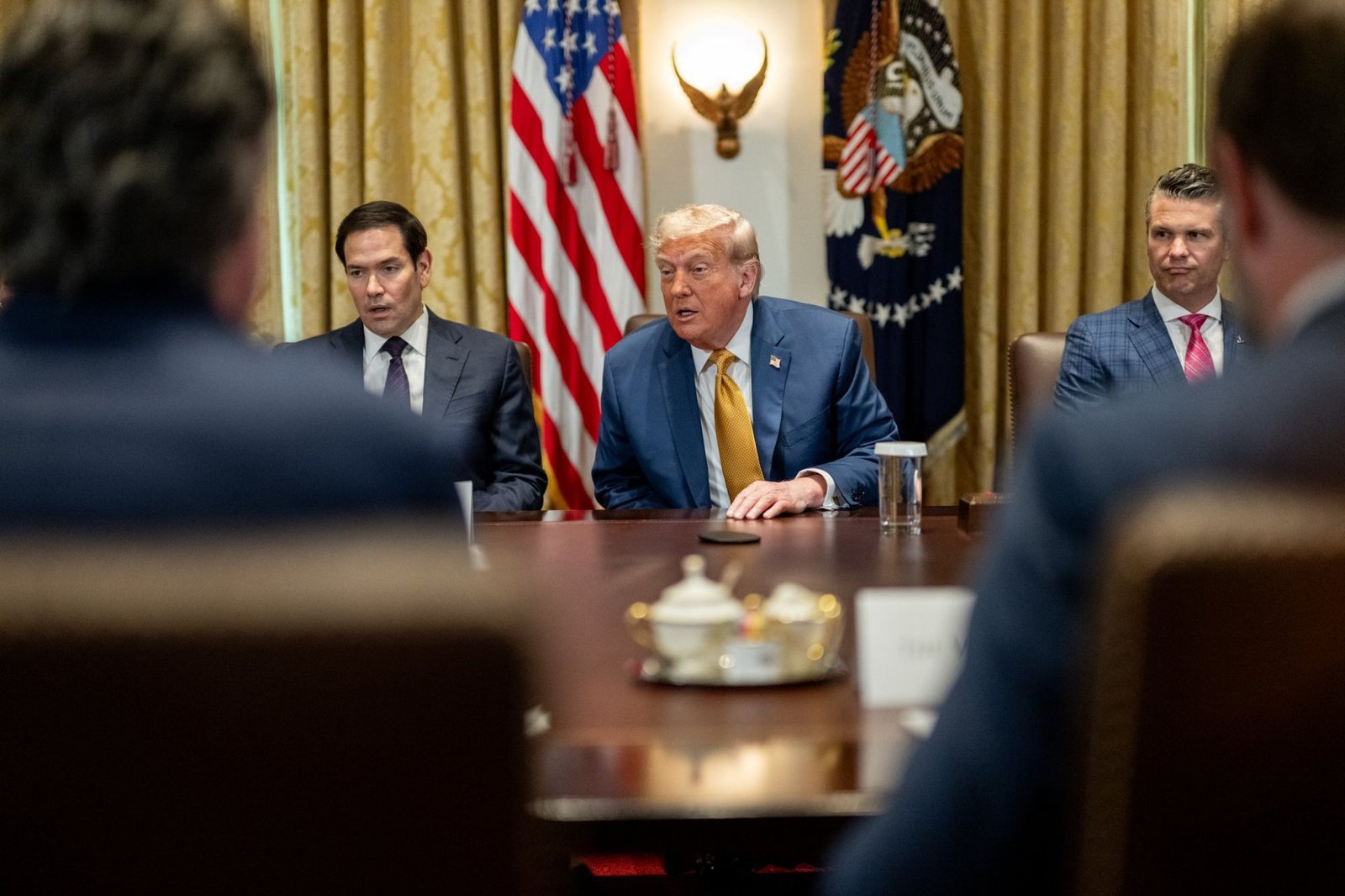
Trade war: In a daring new tariff policy known as “Liberation Day,” U.S. President Donald Trump imposed duties on imports from more than 180 nations without exception. This aggressive action threatens the stability of the U.S. economy and international markets by targeting trade barriers imposed by other countries. While negotiating agreements, Trump has threatened to impose tariffs. For example, he has threatened to impose a 30% tariff on Canada, a neighboring ally, and to impose a 10% tariff on the BRICS countries.
A Push to Rebalance Global Trade
This tariff policy represents a substantial departure from earlier trade tactics and has the potential to upset both economic stability and international trade flows. In an effort to alter trade balances, the Trump administration has imposed high tariffs, such as 54% on China, 20% on the EU, and 27% on India. Significant effects are anticipated in sectors like electronics, steel, dairy, cars, and pharmaceuticals.
Not the First Time for Trump’s Tariff Strategy
Trump has previously experimented with aggressive trade policies. He levied tariffs on China during his first term, which led to retaliatory duties on American goods. The United States-Mexico-Canada Agreement (USMCA) was renegotiated in 2020 as a result of this strategy.
What Are Tariffs?
A government’s taxes on goods and services imported from other nations are known as tariffs. Usually, they are computed as a fixed amount per unit (specific) or as a percentage of the item’s value (ad valorem).
Why Are Tariffs Imposed?
- Protect Domestic Industries: By raising the cost of imports, tariffs increase demand for products made domestically.
- Create Revenue: Tariffs give the government more money.
- Reducing imports aids in balancing trade deficits.
- Put Economic Pressure on Other Countries: Tariffs are a diplomatic tool that can be used to influence other countries.
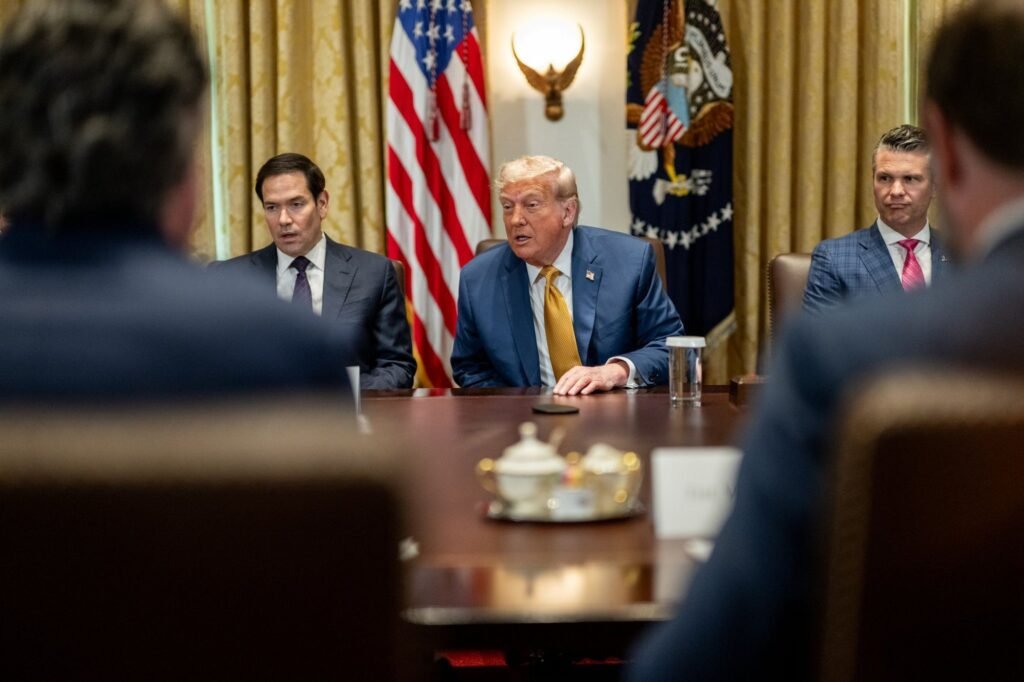
Types of Tariffs
- Ad Valorem: A percentage of the item’s value (e.g., 10% on cars).
- Specific: A fixed fee per unit (e.g., $5 per kilogram of sugar).
- Compound Tariff: A combination of ad valorem and specific tariffs.
- Anti-Dumping Tariff: Applied when goods are sold below market value.
- Countervailing Duty: Used to offset foreign subsidies.
- Reciprocal Tariff: Imposed as a retaliatory measure.
Who Bears the Cost of Tariffs?
While importers pay tariffs at customs, the costs ripple through the economy:
- Consumers: Retail prices may rise.
- Businesses: Profit margins could shrink.
- Exporters: May need to lower prices to stay competitive.
- Production Shifts: In order to get around tariffs, businesses may move their manufacturing to the United States.
How Will the U.S. Implement These Tariffs?
- Customs Collection: In accordance with the Harmonized Tariff Schedule of the United States (HTSUS) codes, duties will be gathered at 328 ports in the United States.
- Importer Declarations: Businesses are required to disclose the goods’ classification, value, and quantity.
- Penalties for False Information: Misreporting may result in fines or criminal charges under Section 592 of the Tariff Act of 1930.
- False Claims Act: Willful tariff evasion carries severe penalties.
What Gets Exemptions?
- American-made products that are returned undamaged are not subject to tariffs.
- Goods with U.S. Components: Full tariffs will still apply to goods made overseas with U.S. components.
Potential Economic Fallout
The broad tariffs may cause the U.S. economy and international markets to become unstable, increasing costs for businesses and consumers and possibly leading to retaliatory trade actions from impacted countries. The world is watching to see how Trump’s aggressive approach will change the dynamics of international trade.
US Slaps Canada with Tariff Blitz, Trump Declares 35% Duty Effective August 1
A 35% tariff on Canadian imports has been announced by the US. President Donald Trump informed Canadian Prime Minister Mark Carney of the new tariff rates in a letter dated Thursday, July 10. Beginning August 1, 2025, Canadian goods entering the United States will be subject to this tariff. Trump referred to it as a reaction to Canada’s retaliatory actions and the continuous trade disputes. The long-standing relationship between the two North American countries may be further strained by this decision.
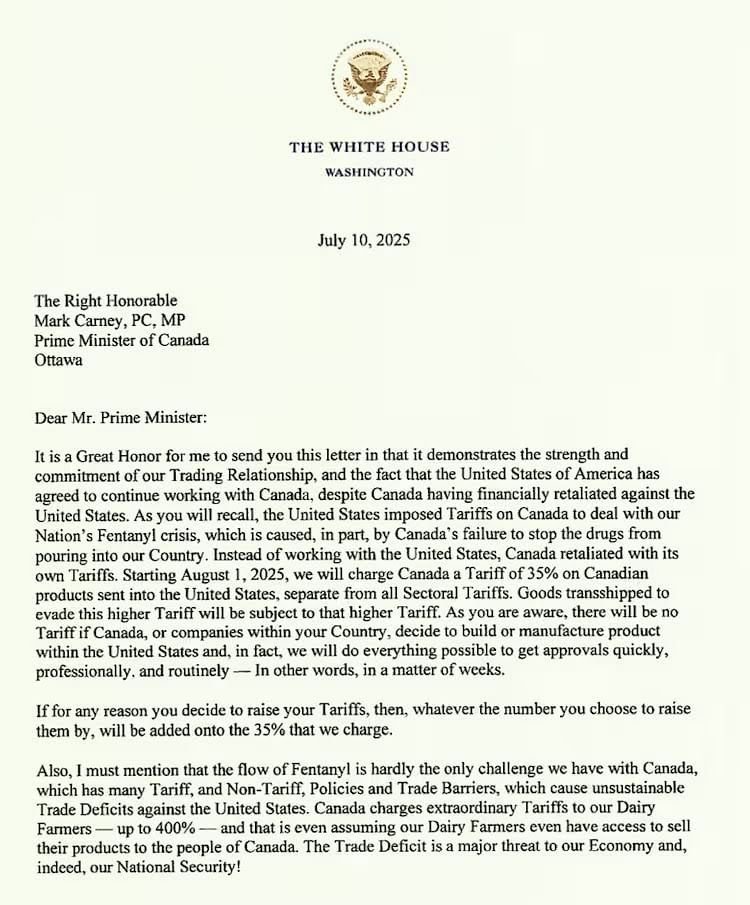
Trump claimed in the letter that Canada responded with its own tariffs rather than cooperating with the US. Separate from all other sectoral tariffs, we will impose a 35% tariff on goods shipped from Canada to the United States as of August 1, 2025. The same 35% tariff will still be applied if any goods are shipped through other nations in order to avoid this higher tariff.
Trump announcement bangladesh tarrif 35 percent
The global textile trade has been rocked by U.S. President Donald Trump’s imposition of a hefty 35% tariff on Bangladesh’s exports. Bangladesh is now in a difficult and uncertain situation as a result of this action. This U.S. policy has the potential to drastically alter the global textile supply chain if it persists. India and other nations might be significantly impacted.
Key effects of the tariff hike:
- Immediate effect on Bangladesh: Bangladesh will be severely impacted by the 35% tariff, which will reduce the competitiveness of its goods in the US market.
- Expensive Bangladeshi textiles: The 35% tariff will make Bangladeshi textiles significantly more costly than those from other nations.
- India’s advantage: India benefits from a substantial 25% cost differential due to its low base tariff of 10%.
India Needs to Stay Cautious
India needs to exercise caution. The explanation for this is that Donald Trump’s trade policies are frequently erratic, subject to sudden changes, and contingent on upcoming discussions. New trade negotiations or revised U.S. policies could change the definite advantage India currently enjoys.
Can India Become the Next Textile Powerhouse?
The current situation offers India a golden chance to expand its presence in the global textile market. However, sustained growth will depend on several factors:
- Increasing production: In order to satisfy demand, India must raise its output.
- Preserving quality: To remain competitive, high standards must be maintained.
- Maintaining competitive pricing is essential, even with tariff benefits.
- Managing trade policies: India needs to adjust to the constantly shifting framework of global trade regulations.
This situation clearly shows how one country’s political decisions can have far-reaching and dramatic effects on global supply chains and the economic futures of entire nations.
Read this news article
BRICS SUMMIT 2025
https://thenewspoint.in/brics-summit-major-outcomes-of-the-brics-summit/
Indias cricket team biggest overseas victory
https://thenewspoint.in/ind-vs-englandindias -biggest-overseas-victory/
The first look of Ramayana has been realised
https://thenewspoint.in/the-first-look-of -ramayana-has-been-released/
Who is Dalai Lama
https://thenewspoint.in/who-is-the-dalai-lama -and-why-is-there-a-dispute/
Thailand pm suspended after leaked call
https://thenewspoint.in/thailand-pm -shinawatra-suspended-after-leaked-call/
Know about 5g technology
https://thenewspoint.in/5g-technology-how-5g -is-changing-the-world/