Russia and Ukraine War
The tensions on Ukraine’s border with Russia are at their highest in years. Fearing a potential invasion by Russia, the US and NATO are stepping up support for Ukraine.
Russia – Ukraine Conflict Background
After the separation of the Soviet union, Ukraine gained independence in 1991.
- Ukraine was a member of the Soviet Union until 1991 when it disintegrated, and Russia has tried to maintain the country in its orbit since then.
- In 2014, a separatist insurgency started in Ukraine’s eastern industrial heartland, Donetsk Basin, also known as.
- Russia further gained a maritime advantage in the region due to its invasion and annexation of Crimea.
- As a result, both the US and the EU have pledged to safeguard the integrity of Ukraine’s borders.
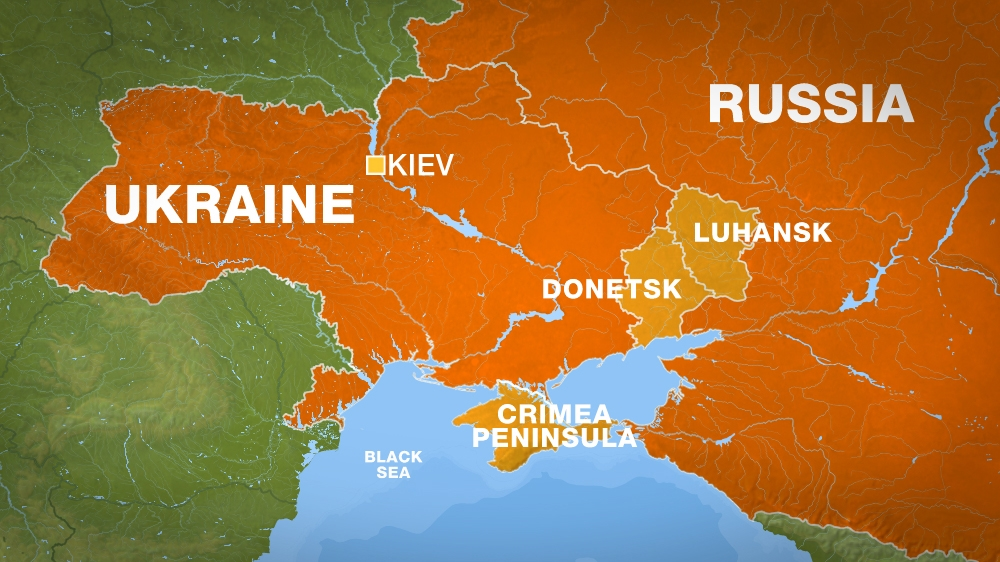
Importance of Ukraine to Russia
- Ukraine and Russia have shared cultural and linguistic ties for hundreds of years.
- Ukraine was the most powerful country in the Soviet Union after Russia.
- Ukraine has been a hub for commercial industries, factories and defence manufacturing.
- Ukraine also provides Russia with access to the Black Sea and crucial connectivity to the Mediterranean Sea.
Reasons for Russian Aggression
The chief reasons for Russian aggression are discussed below.
- Economic Factors
- Russia, considering the economic significance of Ukraine, sought Ukraine’s membership in the Eurasian Economic Community (EAEC), which is a free trade agreement that came into being in 2015.
- With its huge market and advanced agriculture and industrial output, Ukraine was supposed to play an important role. But Ukraine refused to join the agreement.
- Geo-Political and Strategic Factors
- Russia claims that the eastward expansion by the North Atlantic Treaty Organization (NATO) which they call “enlargement”, has threatened Russia’s interests and has asked for written security guarantees from NATO.
- NATO, led by the U.S., has planned to install missile defence systems in eastern Europe in countries like Poland and the Czech Republic to counter Russia’s intercontinental-range missiles.
Russia’s demands
- Russia has demanded a ban on further expansion of NATO that includes countries like Ukraine and Georgia that share Russia’s borders.
- Russia asked NATO to pull back its military deployments to the 1990s level and prohibit the deployment of intermediate-range missiles in the bordering areas.
- Further, Russia asked NATO to curb its military cooperation with Ukraine and other former Soviet republics.
What happened further
On February 18 more than 20 people were killed in clashes with police, but that was merely a hint of what was to come. Two days later the center of Kyiv became a battleground. Government snipers fired on protesters from the roofs of buildings, killing at least 80 and wounding hundreds. Amid the chaos the Maidan protesters held their ground. On February 21 a group of EU foreign ministers arrived in Kyiv to broker a deal between Yanukovych and parliamentary opposition leaders. The parties agreed to form a government of “national unity” within 10 days, implement constitutional reforms to reduce the powers of the presidency—reinstating the constitution of 2004—and hold new presidential elections by December 31. Yanukovych would remain president until those elections were held. The opposition leaders agreed to the deal, and Putin, in a telephone conversation with U.S. Pres. Barack obama, appeared to support it. The following day, however, Yanukovych fled Kyiv. The parliament responded by stripping him of his office, ordering the release of Tymoshenko from prison, and appointing Oleksandr Turchynov acting president. New presidential elections were called for May 25.
About volodymyr Zelensky
In 2019 Volodymyr Zelensky was elected president of Ukraine. In his hit television show Servant of the People, the actor and comedian had portrayed an everyman who followed an unlikely path to the presidency.
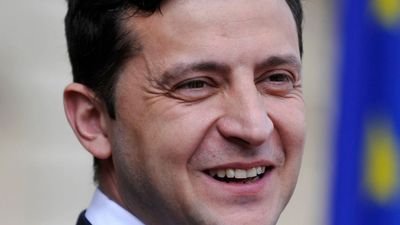
Life would imitate art as Zelensky’s anti-corruption platform earned him widespread support, and he defeated Poroshenko in a landslide. Zelensky pledged to bring the conflict in the Donbas to a close, but his efforts were complicated when he was drawn into a political scandal in the United States. The I.S. congress had authorized some $400 million in military aid for Ukraine, but U.S. President Donald Trump held up the release of that security assistance. In a phone call with Zelensky on July 25, 2019, Trump implied that the aid would be released only if Zelensky “would do us a favor” by endorsing a pair of unsubstantiated claims about Trump’s political opponents. Zelensky never provided the “quid pro quo” that Trump had requested, and the funds were finally made available in September 2019. Trump’s attempt to pressure a foreign government for personal political gain led the U.S. house of Representatives to launch impeachment proceedings against him in December 2019.
Perspective of volodymyr Putin
Putin argues that Russians and Ukrainians, along with Belarusians, are one people, belonging to what has historically been known as the triune Russian nation.
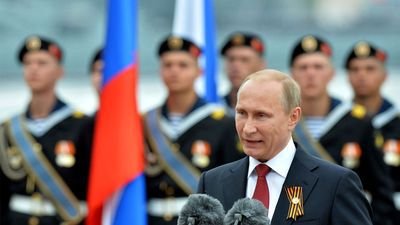
Any settlement based on Trump’s proposals would have been easy to sell as a Russian success story. Indeed, many would have regarded it as an unprecedented triumph for the Kremlin. Despite these positive optics, Putin has remained unmoved. While the Russian ruler has consistently voiced his theoretical support for America’s efforts to end the war, he has in practice derailed any hope of meaningful progress toward peace by engaging in endless stalling tactics and insisting on demands that would mean the effective end of Ukrainian statehood.
Side of India
Prime Minister Narendra Modi, speaking on the Lex Fridman podcast, reiterated his call for diplomacy to resolve the war in Ukraine, telling Russian President Vladimir Putin that “this is not the time for war” while advising Ukrainian President Volodymyr Zelensky that battlefield victories will not lead to a lasting resolution.
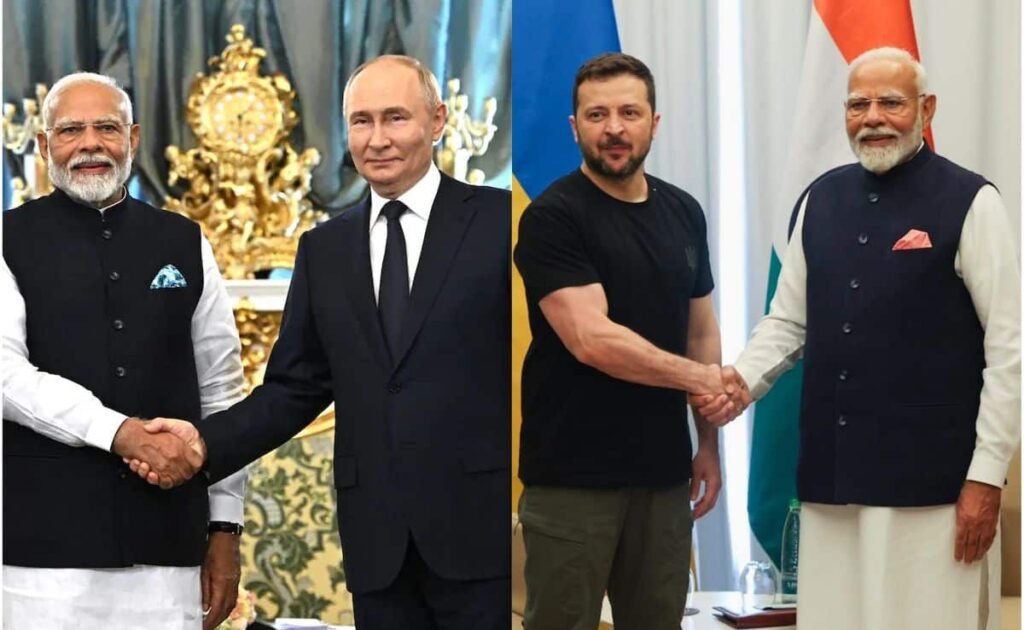
Speaking on the ongoing Russia-Ukraine conflict, PM Modi said he has close ties with both countries.
“I have a close relationship with Russia and Ukraine alike,” he said. “I can sit with President Putin and say that this is not the time for war. And I can also tell President Zelensky, in a friendly way, that brother, regardless of how many people stand with you in the world, there will never be a resolution on the battlefield.”
“Ukqraine may hold countless discussions with their allies, but it will bear no fruit. Discussions must include both parties instead,” he added.
Read these articles
Saiyaara movie review
https://thenewspoint.in/saiyaara-movie-review-a-love-tale-make-emotional/
Keanu Reeves
https://thenewspoint.in/keanu-reeves-most-humble-actor-in-hollywood/
Pahalgam attack
https://thenewspoint.in/know-what-and-how-the-pahalgam-attackkashmir-hap/
PM Modi’s UK tour
https://thenewspoint.in/serves-man-masala-chai-to-pm-narendra-modi-uk-pm/
Mumbai local train attack 2006
https://thenewspoint.in/mumbai-local-train-attack-2006-is-justice-in-right/