Terrorists attacked on tourists in the Baisaran valley of Pahalgam, in Jammu and Kashmir, on April 22, 2025, leaving dozens dead and several more injured. It was the first major terror attack on civilians in Kashmir.
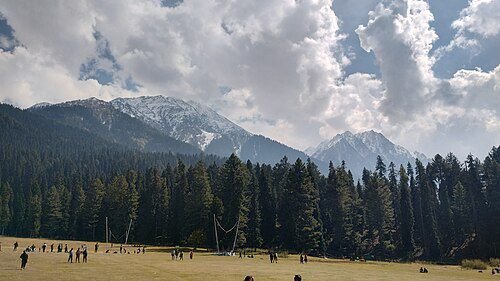
The 2025 Pahalgam attack was a terrorist attack on tourists by five armed terrorists near pahalgam inIndian-administered jammu and kashmir in which 26 civilians were killed on 22 April 2025. The militants mainly targeted Hindu tourists, though a Christian tourist and a local Muslim were also killed. The attackers, armed with M4 carbines and AK-47 entered the tourist spot in Baisaran valley surrounded by dense pine forests. This incident is considered the deadliest attack on civilians in India since the 2008 Mumbai attack. 2025 Pahalgam attackPart of the Insurgency in jammu and kashmir.
View of the valley where the attack occurred
Pahalgam (Jammu and Kashmir)Show map of Jammu and KashmirShow map of IndiaShow all
Location of the attack in Jammu and Kashmir Location Baisaran valley, Pahalgam, Jammu and Kashmir.
Date – 22 April 2025
Target – Tourist
Attack type – Mass shooting and Mass murder
Weapons – AK-47,M4 Carbines
Deaths – 26 and 20 injured
Response
- One, the Indus Water Treaty of 1960 will be held in abeyance with immediate effect until Pakistan credibly and irrevocably abjures its support for cross-border terrorism.
● Two, the integrated checkpost Attari would be closed with immediate effect.
● Three, Pakistani nationals who were traveling under SAARC visa exemption scheme would no longer be allowed to do that.
● Four, the Defence, Naval and Air Advisors of the Pakistani High Commission would be declared persona non-grata and,
● Five, the overall strength of the High Commission would be brought down to 30 from the number of 55.
The Resistance Front (TRF), which is a terrorist organization and proxy for Pakistan-based, UN-designated, Islamist terrorist group Lashkar-e-Taiba(LeT), initially claimed responsibility for the attack. TRF released a statement that the attack was in opposition to non-local settlement in the region resulting from the aborale of Kashmir.After a few days, TRF denied its involvement in the attack.Previously, TRF has claimed responsibility for several attacks in Indian-administered Kashmir targeting religious minorities.
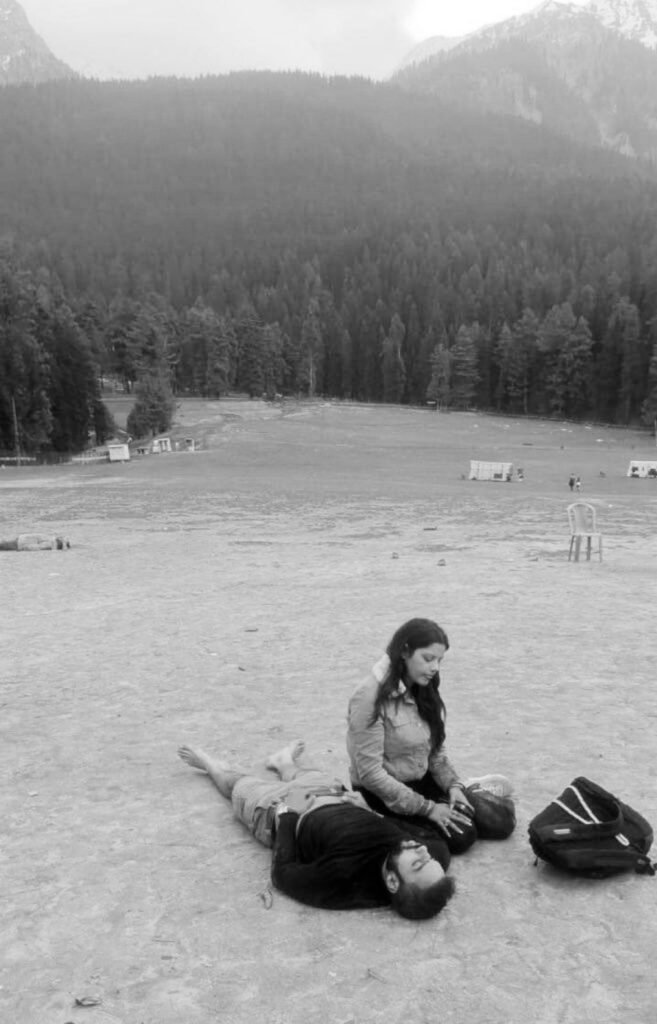
The militants singled out the men and asked for their religion before shooting the Hindu and Christian tourists.The attackers also asked some tourists to recite the Islamic kalmia, a Muslim declaration of faith, to identify non-Muslims. 26 people killed, 25 were tourists, and one was a local Muslim pony ride operator who tried to wrestle a gun from the attackers. The tourists included several newlywed couples, and the men were shot point-blank in front of their wives.
The attack intensified tensions between India and Pakistan as India accused Pakistan of supporting cross border terrorism and suspended the Indus Water Treaty, expelled Pakistani diplomats and closed borders. Pakistan rejected these claims and retaliated by suspending the simla aggreement, restricting trade, and closing airspace. A standoff between both countries led to a military conflict on 7 May 2025 when India launched airstrikes targeting alleged terror camps in Pakistan.
The status of Kashmir
Kashmir – also known as the Switzerland of Asia – was once a princely state and has always been a central point of contention between India and Pakistan since partition. The Kashmiri population is religiously and culturally very diverse, consisting of Muslims, Hindus, and Buddhists. During partition, the princely states were given the choice to either join India or Pakistan. At the end of British rule, the Hindu ruler of Kashmir – Maharaja Hari Singh – despite a majority of Muslims living in the Kashmir valley, opted to join India in exchange for military support against attacks by invading tribesmen from Pakistan. After three wars, the 1972 shimla Agreement divided Kashmir into two separately administered regions and established the Line of Control that still applies today and determines that any dispute should be settled bilaterally without any third-party intervention.
Answer of attack (Revenge)
In response to the attack, India suspended the Indus Water Treaty that distributes the water between India and Pakistan – which was perceived as an ‘act of war’ by Pakistan – and in return suspended the Shimla Agreement. On 9 May, India launched Operation Sindoor, named after the red vermilion often used in Hindu ceremonies and worn by married Hindu women. India carried out air strikes across the border against sites that have been used by Lashkar-e-Taiba, jash-e-mohamad and Hizbul Mujahideen, allegedly killing a hundred terrorists. The Indian army was apparently given complete freedom to act as one wishes or thinks best. to target terrorists across the borders.
Statements of political leaders
“The air was heavy with grief – families torn apart, innocent lives cut short, dreams extinguished before they could bloom. Standing there, amidst the pain and silence, one couldn’t help but feel the cruelty of terror and the unbearable weight it imposes on humanity. We must stand united, not only in mourning but also in our unflinching resolve against violence, against terror,” Mr. Venugopal said in a post on X.
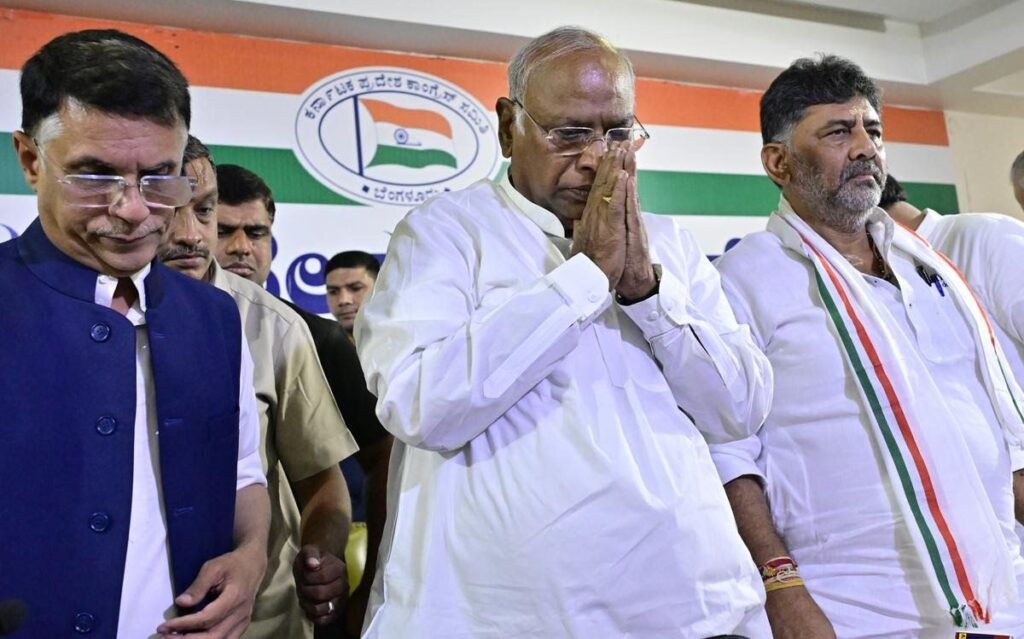
U.S. President Donald Trump, Russian President Vladimir Putin and Israeli Prime Minister Benjamin Netanyahu were among world leaders who condemned the terror attack in jammu and kashmir where 26 people killed , expressing solidarity with India.
In short
Hashim Musa, #PahalgamTerrorAttack Mastermind, Among 3 Terrorists Killed In Encounter Near Srinagar.
Also Read this article
Saiyaara movie review
https://thenewspoint.in/saiyaara-movie-review-a-love-tale-make-emotional/
The journey of virat kohli
https://thenewspoint.in/journey-from-virat-kohli-run-chase-tobecoming-king/
Brics summit
https://thenewspoint.in/brics-summit-major-outcomes-of-the-brics-summit/
I phone 16
https://thenewspoint.in/iphone-16-a-simple-and-powerful-smartphone/
5G technology
https://thenewspoint.in/5g-technology-how-5g-is-changing-the-world/