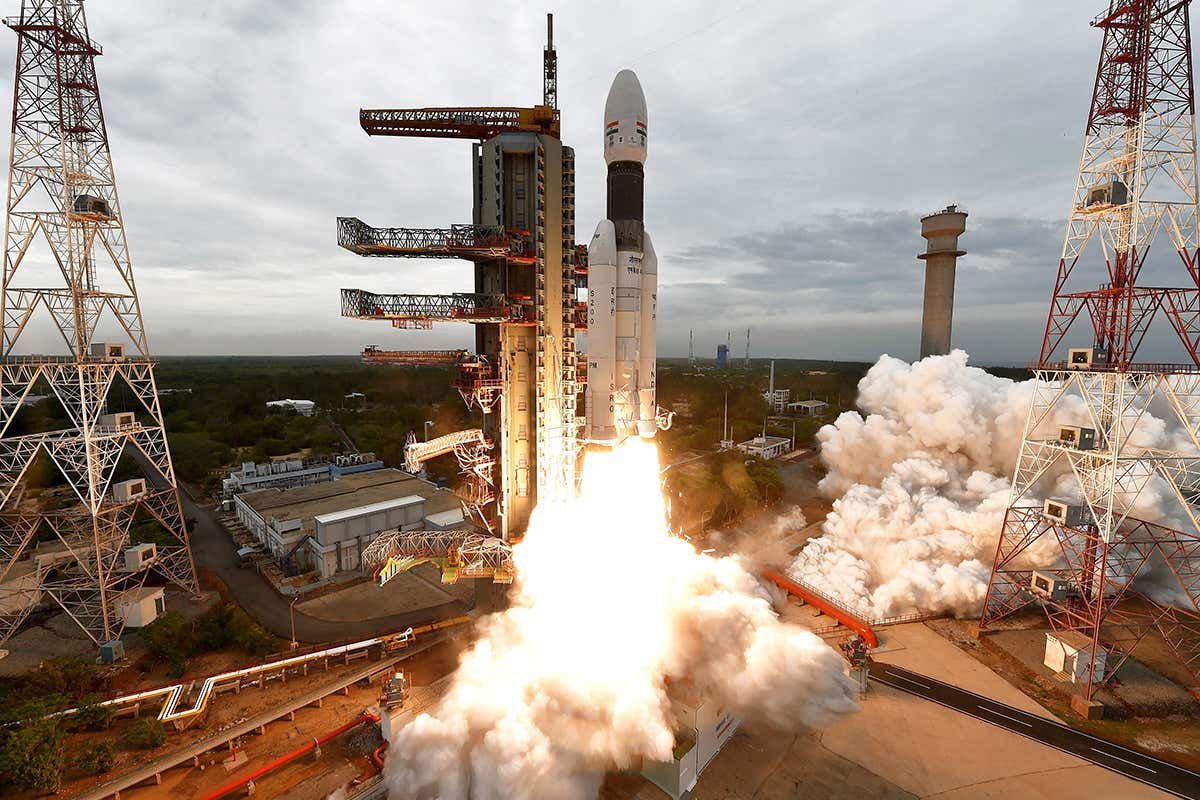
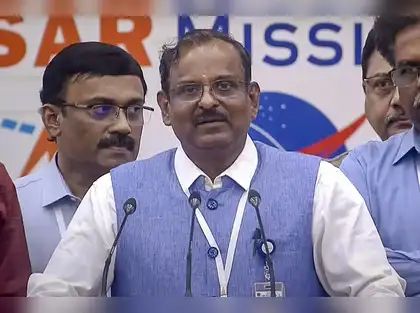
ISRO Chairman V. Narayanan said on Tuesday that the Indian space agency is working on building a rocket as high as a 40-storey building to send 75 thousand kg payload to low Earth orbit. Narayanan said at the convocation ceremony of Osmania University, ISRO has prepared projects like Navik (Navigation with Indian Constellation) satellite and Ana rocket this year. America’s 6,500 kg satellite will also be put into orbit by Indian rocket. By 2035, a 52-ton space station will be built. Work is also going on on Venus Orbiter Mission.
He said, we are preparing to build a rocket to send 75 thousand kg payload to low Earth orbit. This rocket will be as high as a 40-storey building. This year
India will build a space station by 2035, work is going on on Venus Orbiter Mission.
There is also a plan to launch Technology Demonstration Satellite and GSAT-7R. At present, India has 55 satellites in orbit. This number is going to increase three times in three to four years. So far India has launched more than four thousand rockets. At the convocation ceremony, Telangana Governor Jishnu Dev Verma conferred an honorary doctorate degree in science to Narayanan for his contribution to India’s space program. Regarding astronaut Shubhanshu Shukla’s visit to the International Space Station (ISS), he said that the visit was scheduled for June 11, however, it was postponed to June 25 after a leak was detected in the rocket a day before. ISRO scientists identified a fault in the main feed line of the rocket carrying Shubhanshu and three other astronauts to the ISS, due to which the launch program was changed. The ISRO team camped at Kennedy Space Center in the US came to know about the defect found in the rocket on June 10. Based on the Indian education system and ISRO’s training, the rocket was repaired. Narayanan said, I know what difficulty it is if a rocket takes off with a leak. If the mission had continued with this problem, it would have been a ‘catastrophic failure’.
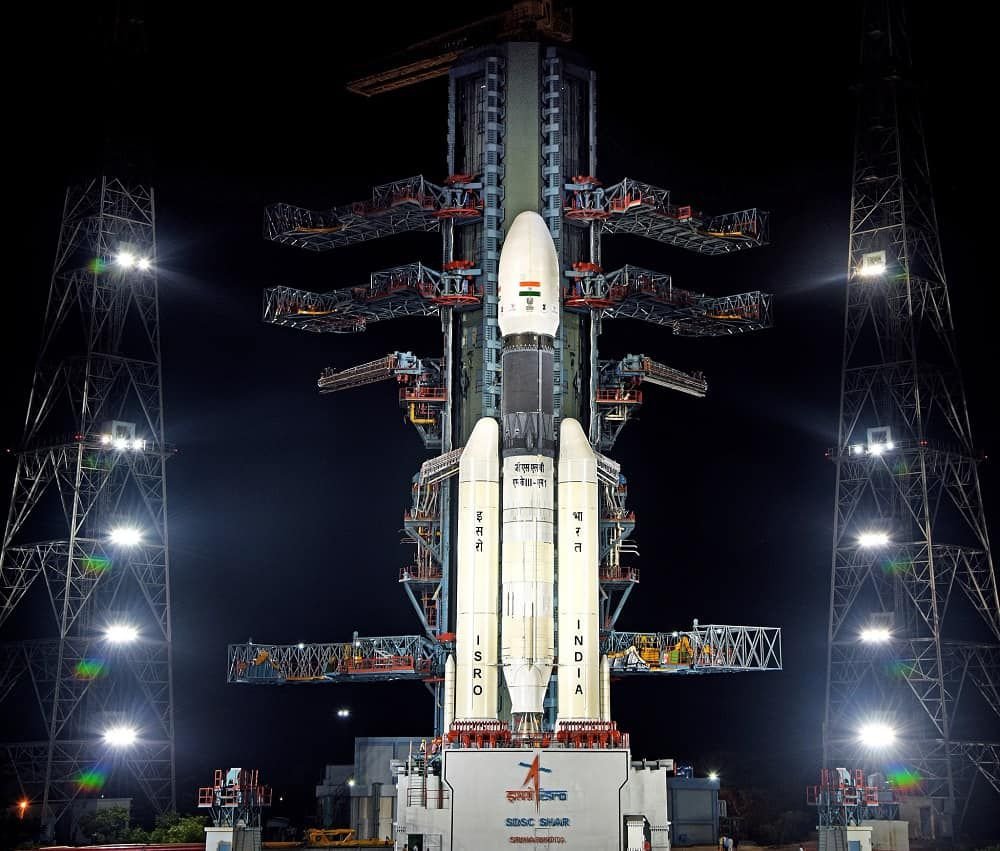
Speaking at the convocation ceremony of Osmania University, Narayanan outlined the upcoming projects, including the NAVIC (Navigation with Indian Constellation) satellite, the N1 rocket, and the launch of a 6,500 kg communication satellite of the USA using Indian launch vehicles.
“You know, what is the capacity of the rocket? The first launcher, (Dr APJ) Abdul Kalam ji, which he built was a 17 tonne lift-off mass, capable of placing 35 kg in low earth orbit. Today, we are conceiving a rocket to place 75,000 kg in low earth orbit. The rocket is of 40-storey building height,” PTI quoted him as saying.
He added that ISRO also plans to launch the (TDS) and GSAT-7R, a military communication satellite for the Indian Navy that will replace GSAT-7 (Rukmini), within this year.
Currently, India has 55 satellites in orbit. “The number is going to be increased to three times in another three to four years,” Narayanan said.
ISRO Chairman V. Narayanan spoke about this new rocket at the convocation of Osmania University in Hyderabad. He said that this rocket will be so huge that its height will be equal to a 40-storey building. This rocket will be able to place a satellite weighing 75 tons (75,000 kg) in Low Earth Orbit (LEO). Low Earth Orbit is the orbit which is at a height of 600-900 km from the Earth, where communication-observation satellites are placed. Narayanan compared it to India’s first rocket, which was made by Dr. APJ Abdul Kalam. That rocket (SLV-3) weighed only 17 tons. It could carry a 35 kg satellite into orbit. ISRO’s new rocket has the capacity to carry 2000 times more weight than that. This shows the progress of India’s space program.
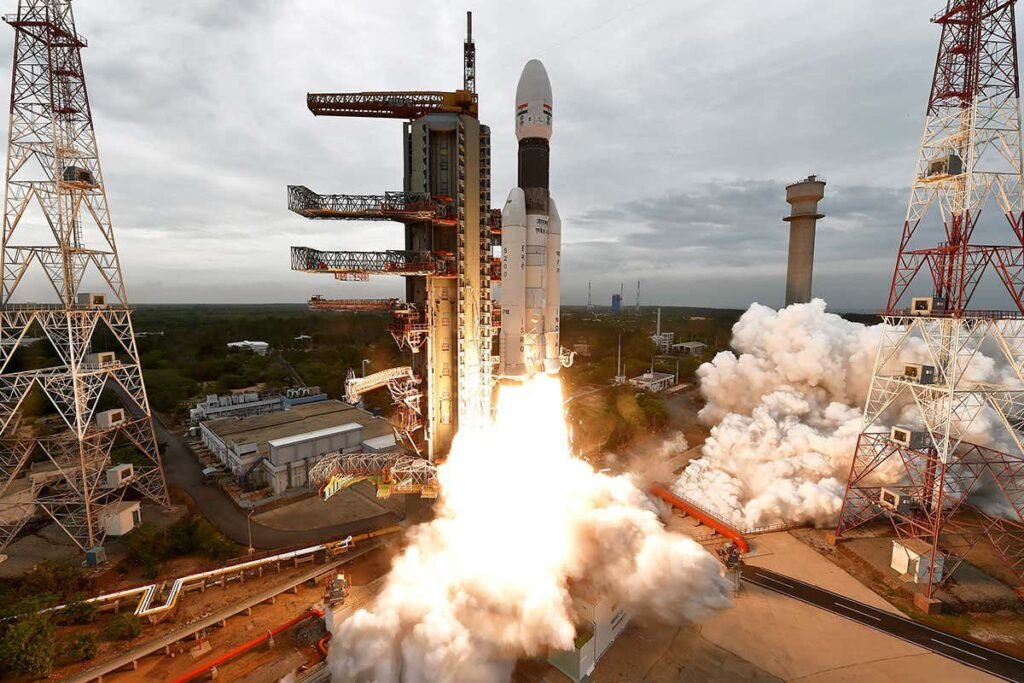
ISRO’s big projects this year
Narayanan said that ISRO is working on many big projects in 2025…
- NAVIC satellite :
This is India’s own navigation system, which is an alternative to GPS. It gives accurate location and time information for military and civilian use.
- N1 rocket :
This is a new rocket of ISRO, about which not much information has been given yet, but it will be important for future missions.
- US communication satellite:
ISRO will put America’s 6,500 kg Block-2 Bluebird satellite into orbit with its LVM3 rocket. This satellite belongs to AST SpaceMobile company and it will give internet connection to smartphones directly from space. It shows the strength of India’s international space cooperation.
- Technology Demonstration Satellite (TDS):
This satellite will test new technologies, which will lay the foundation for future missions.
- GSAT-7R:
It is a military communication satellite for the Indian Navy, which will replace the existing GSAT-7 (Rukmini). It will further strengthen the communication capability of the Navy.
Important and big projects of ISRO till now
- Chandrayaan-1:
It was India’s first lunar mission, launched in 2008. The mission detected the presence of water molecules on the surface of the moon, giving the world information about water on the moon.
- Chandrayaan-2:
Launched in 2019, the mission was supposed to land on the south pole of the moon but was partially successful due to a failure in soft landing.
- Chandrayaan-3:
Launched in 2023, Chandrayaan-3 is a follow-up mission to Chandrayaan-2, aimed at demonstrating a safe and soft landing on the moon. The mission consists of a lander, a rover and a propulsion module.
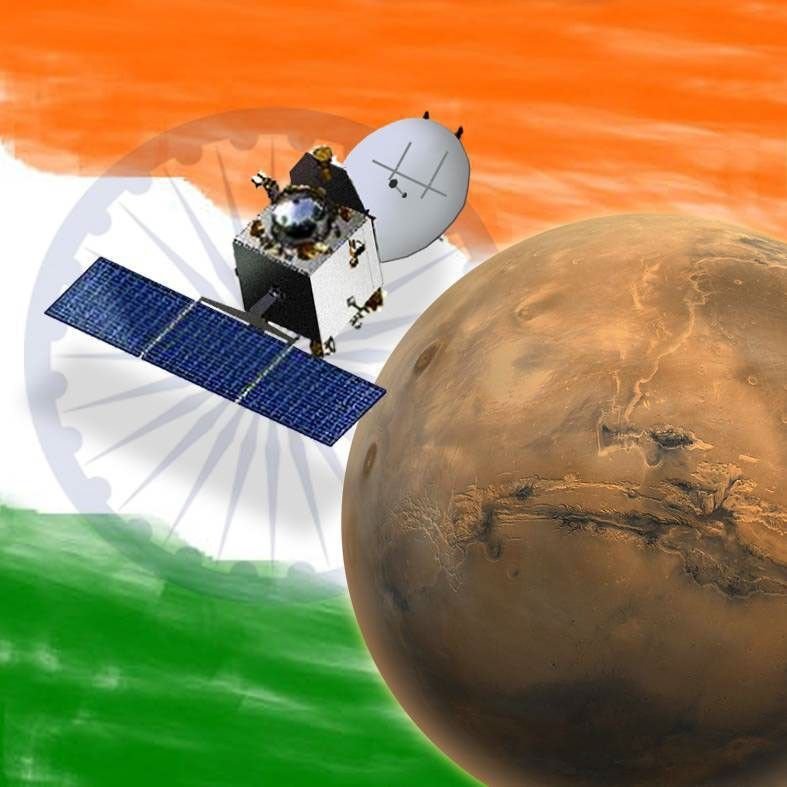
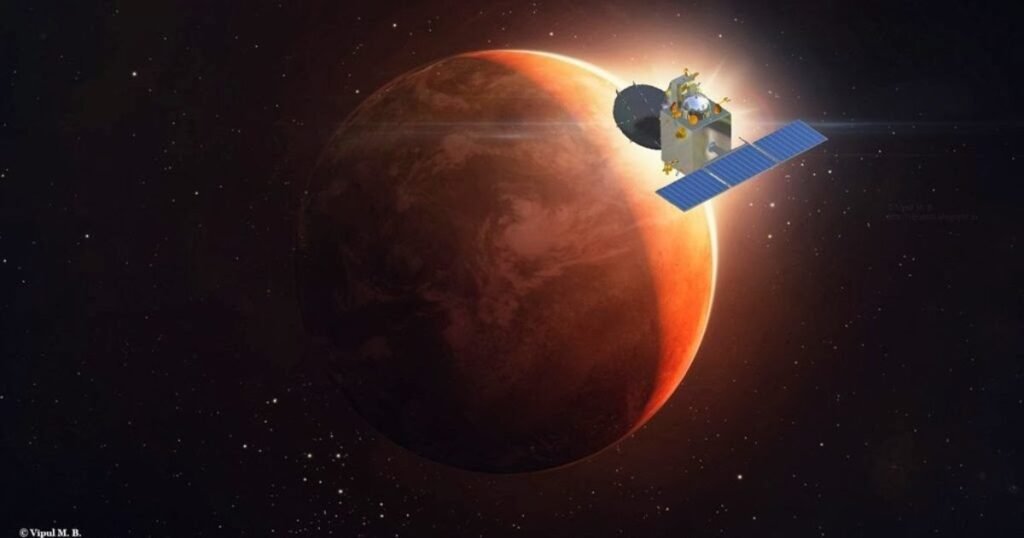
- Mangalyaan (Mars Mission):
Launched in 2013, it was India’s first interplanetary mission, which successfully entered the orbit of Mars.
- Gaganyaan (Human Space Mission):
It is India’s ambitious human space mission, aimed at sending Indian astronauts into space.
- Satellite Launch Vehicles:
ISRO has developed several launch vehicles to send different types of satellites into space, such as PSLV (Polar Satellite Launch Vehicle) and GSLV (Geosynchronous Satellite Launch Vehicle).
- Communication Satellites:
ISRO has also developed several communication satellites for communication, meteorology, and other purposes, such as INSAT (Indian National Satellite System) and GSAT (Geosynchronous Satellite) series.
Source:-News agency
Read these articles
Vikram Sarabhai
https://thenewspoint.in/vikram-sarabhai-is-considered-the-father-of-the-i/
Nisaar satellite
https://thenewspoint.in/?p=3588
Galaxy Z fold 7
https://thenewspoint.in/gadget-review-galaxy-z-fold-7-unique-model-of-sam/
Captain Cool of chess
https://thenewspoint.in/the-one-and-only-first-world-fem6-champion-divya/
Mahatma Gandhi
https://thenewspoint.in/about-mahatma-gandhi-father-of-nation1869/